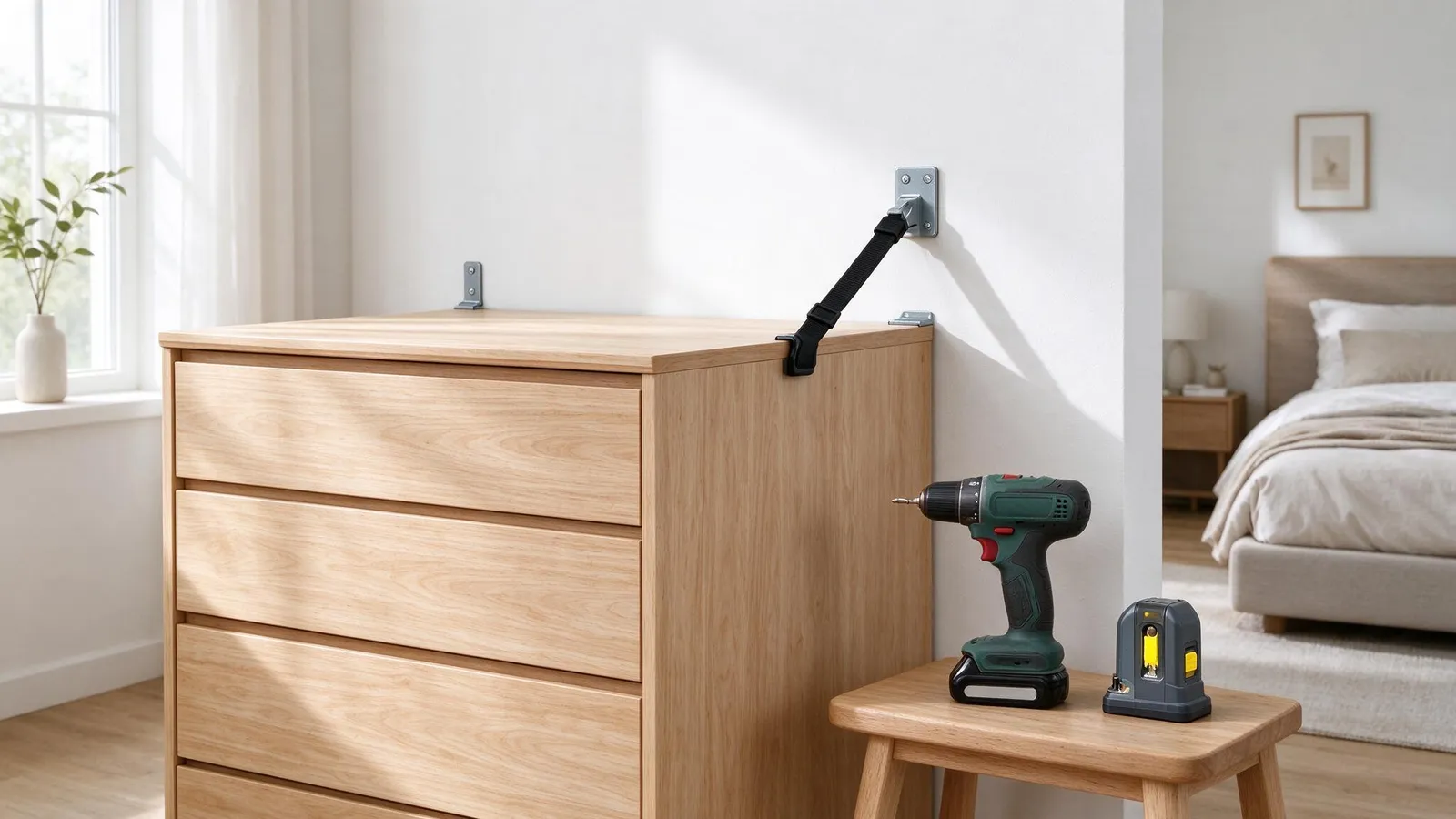
How to Anchor Furniture to a Wall: Step-by-Step Guide
Anchoring dressers, bookcases, and TVs takes an anti-tip kit and a short install. Here's what to secure, how to do it, and what to do if you can't drill.
Mold keeps coming back when moisture does. Here's how renters can control humidity, fix problem spots room by room, and know when a mold issue is too big to handle alone.
Published · 4 min read

To prevent mold in a small apartment, control moisture first. The EPA says that if you clean mold without fixing the water problem, it will most likely return. That's why scrubbing the same bathroom corner every few weeks rarely solves anything.

There are two targets to remember. The EPA recommends keeping indoor relative humidity below 60 percent, ideally between 30 and 50 percent. It also advises drying water-damaged areas and items within 24 to 48 hours to prevent mold growth.
You can't manage what you don't measure. The EPA recommends using a humidity indicator to check the relative humidity in your home, and it notes that gauges that track both temperature and humidity are generally available for less than $50 at hardware stores or online.

The EPA explains that without adequate ventilation, moisture can build up indoors, allowing mold to grow. It also notes that a tight, energy-efficient home holds more moisture inside, so you may need to run a kitchen or bath fan or briefly open a window.
Consider placing your gauge in the room that feels dampest, then checking it at different times of day, such as after showers or cooking. Jotting down readings for a week or two can help you spot patterns.
| Option | What it does | Best fit | Keep in mind |
|---|---|---|---|
| Exhaust fans (bath and kitchen) | The EPA recommends them to send moisture outside, not into the attic | Daily steam from showers and cooking | Check whether your fans actually vent outdoors; ask your landlord if unsure |
| Briefly opening a window | The EPA notes it can help release moisture in a tight home | Quick moisture bursts | It can help to keep it short in bad weather |
| Dehumidifier or air conditioner | The EPA recommends them, especially in hot, humid climates | Persistently humid apartments | The EPA notes the appliances themselves should not become sources of biological pollutants |
In practice, many renters use both: fans for moments of heavy steam and a dehumidifier or AC for overall humidity. Consider emptying and cleaning your dehumidifier regularly so it stays part of the solution.

| Area | Moisture source | What to do |
|---|---|---|
| Bathroom | Showers and running water | The EPA says more ventilation (a fan or open window) plus more frequent cleaning will usually prevent mold from recurring or keep it to a minimum. Use an exhaust fan that vents outside. |
| Kitchen | Boiling and steaming while cooking | Run the exhaust fan, which the EPA recommends venting outside. |
| Laundry | Dryer exhaust and indoor clothes drying | The EPA recommends venting the clothes dryer outside and lists drying clothes indoors as a source of excess moisture. |
| Closets | Enclosed air | It can help to leave closet doors open so air can circulate. |
| Cold walls behind furniture | Condensation | The EPA notes mold is often found on walls in cold corners behind furniture, where condensation forms. Pull furniture away from wall corners. |
The EPA suggests using fans and moving furniture away from wall corners to improve circulation. It also lists long showers, running water, cooking steam, plants, and indoor clothes drying as sources of excess moisture. Here's a checklist to put that into practice:

According to the EPA, if the moldy area is less than about 10 square feet (roughly a 3 ft. by 3 ft. patch), in most cases you can handle the cleanup yourself. Work in this order:

EPA guidance on mold cleanup and prevention is meant for renters as well as homeowners, so these signals apply to you too:

Before paying for mold testing, know that there are no established safe levels or regulatory standards for mold, so testing may be of limited use. If you or your landlord hire a company, keep in mind that the EPA does not certify mold inspectors or remediation firms, and it can help to check qualifications and references.
It can help to report problems in writing and keep photos and humidity readings, so you and your landlord have a clear record to work from.

Anchoring dressers, bookcases, and TVs takes an anti-tip kit and a short install. Here's what to secure, how to do it, and what to do if you can't drill.